Adding Springtails to a Bioactive Enclosure
Last reviewed October 15, 2026
In a bioactive terrarium, vivarium or isopod bin, springtails are the clean-up crew: they live in the substrate and leaf litter, eating mold, fungi and decaying matter. Here's how to add them so they take hold.
How to add them#
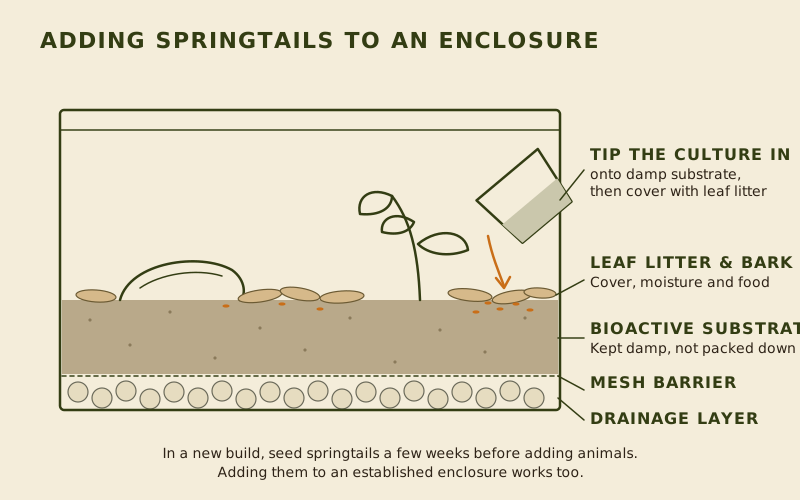
- Tip the culture, substrate and all, onto damp substrate, ideally in a shaded spot near cork bark or plant roots.
- Spread it a little and cover it lightly with leaf litter or moss. That gives them cover, holds moisture, and becomes food as it breaks down.
- Keep the substrate loose and damp. Don't pack it down, and don't let it dry out.
Building a new enclosure? Add springtails before the plants, leaf litter and moss go in, by spreading the culture into the substrate layer.
When to add them#
Ideally, seed springtails 3 to 5 weeks before adding animals, so the population is established first. Seeding early also helps keep fungus gnats and detritus mites from booming in a new build. Adding them to an established enclosure works fine too.
How many you need#
Smaller vivariums need only a few dozen springtails; larger enclosures may need a few hundred or more. As a rough guide, a culture of a few hundred can seed three or four small enclosures (up to 12 × 12 inches), two or three medium ones (up to 18 × 18), or one large one. More is always better: a crew's strength is in its numbers.
After they're in#
- Give them time. Like a culture, an enclosure population takes weeks to grow; you may see very few at first.
- Once established, they usually never need to be re-added, as long as the substrate stays damp.
- Small animals such as dart froglets will eat some springtails. That's expected, and part of why keepers like them.
Keeping extra springtails on hand makes it easy to top up. See how to keep a springtail culture.